
Guide · blockout for day sleep
Blinds for shift workers: full dark at 11am
A big share of the valley works a roster, not a day. If your body has to sleep while the sun’s up, the bedroom is the most important room in the house. Here’s how we’d make one you can actually sleep in.
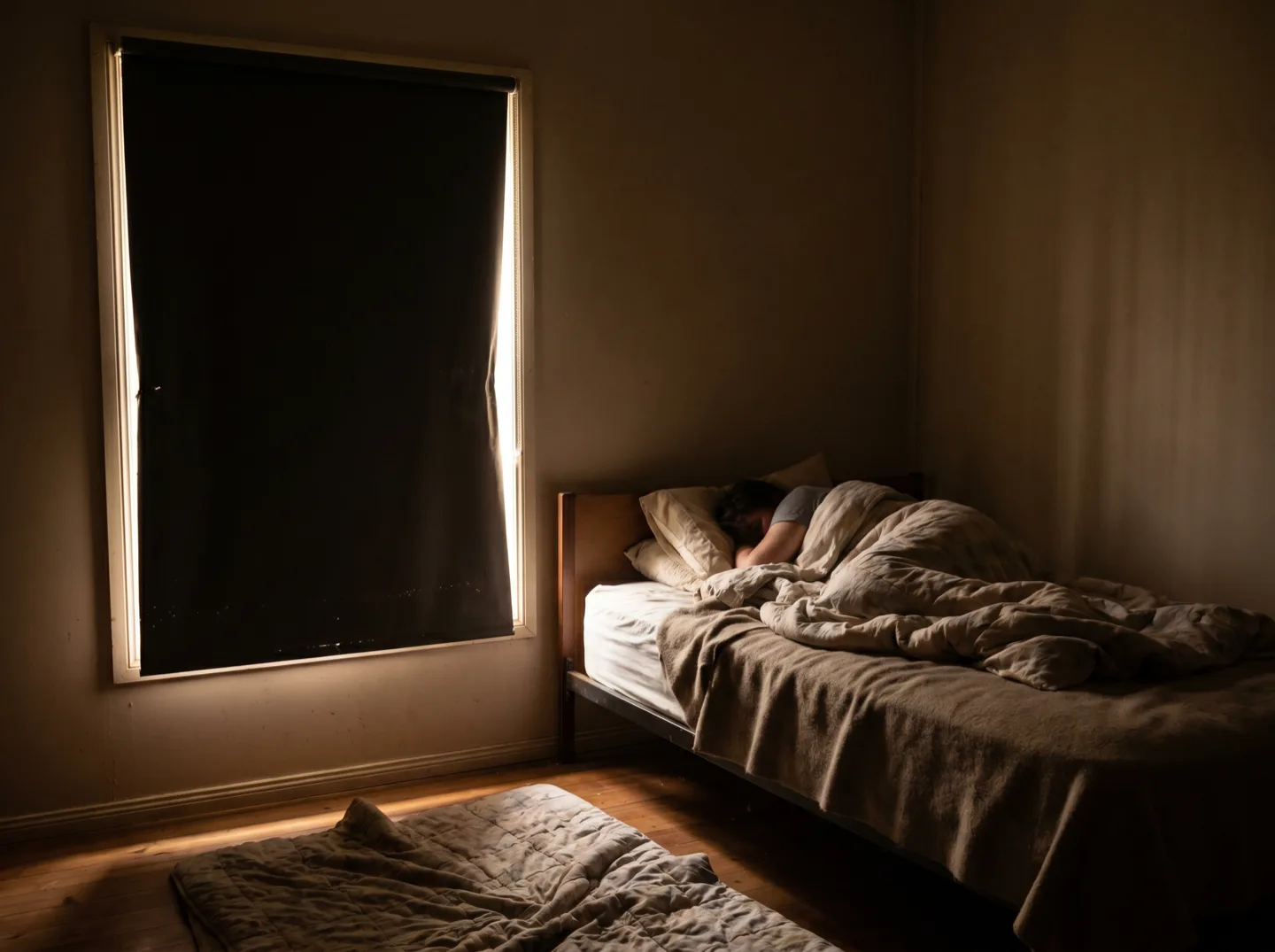
A blockout blind, doing most of its job. Look at the edges: that glow is why the room isn’t dark enough.
A dim room and a dark room are not the same thing
Your body clock reads light, not the time. When you lie down at eight in the morning, even a little daylight tells your brain it’s daytime and keeps you in a lighter, worse sleep. The goal isn’t “darkish”. It’s dark enough that your eyes give up looking for the edges of the window.
Most bedrooms get to darkish easily. Getting to genuinely dark is where the details matter, and where a cheap blind quietly fails.
Where the light actually gets in
A good blockout fabric stops the light coming straight through. That part is basically solved by choosing the right fabric. The light you’re still fighting comes in three ways round the blind:
- The sides. A standard roller sits a few millimetres off the wall, so a bright line runs down each edge. On an east or west window in summer, that line is fierce.
- The bottom. Light bounces up off the sill and the floor under the bottom rail.
- The top. Around the roll and the brackets, especially on a face-fixed blind.
Add those up and a “blockout” blind can still leave a room you can read a phone in. That’s the gap between a blind that blocks light and a room that’s dark.
How we close the gap
The honest fix is to seal the edges, not just hang blockout fabric:
- Side channels. Aluminium tracks down each side of the window that the blind runs inside, so there’s no light line down the edges. This is the single biggest improvement for a day sleeper.
- A cassette or pelmet at the top. Boxes in the roll so light can’t escape around the top.
- A generous fit. Sizing and mounting the blind so the fabric overlaps the opening rather than sitting tight inside it.
You don’t always need all three. A back bedroom that’s already shaded might be fine on a well-fitted blockout roller. A west-facing room that takes the full afternoon usually wants the channels. We work that out on the window.
The quiet part matters too
If you share the house with people on a normal clock, a blind you can raise and lower without a rattly chain is worth having. We’ll set the operation so a mid-shift trip to the bathroom doesn’t wake the room. For a bank of windows or something high, motorised takes the noise and the reach out of it entirely.
The double-roller trick for a room that does two jobs
Plenty of shift-work houses have a room that’s a bedroom for the day sleeper and a normal living space the rest of the time. A double roller hangs a blockout and a light-filter on the one window. Pull the sheer through the day for privacy and glare, drop the blockout when it’s time to sleep. One window, both worlds.
Don’t forget the cords
If there are kids in the house, the bedroom blinds still have to be safe. Loose blind cords are covered by a mandatory Australian safety standard, and cordless operation removes the risk entirely. We fit to the standard as a matter of course and use cordless where a room needs it. There’s a full rundown in our child-safe blinds guide.
What to bring to the measure
You don’t need to know the products. Just tell us which bedrooms are for day sleep, which way they face, and whether kids use them. The room planner will turn that into a starting list. We’ll do the rest on the window and quote it in writing.
Sources
- ACCC Product Safety, Blinds, curtains and window fittings guide, the national guidance on corded-blind safety at home.
Book the free measure
Tell us the rooms and how you live in them. We'll come out, measure up, and give you a written quote for made-to-measure blinds. Full dark at midday, if that's what the room needs.